
Rabies
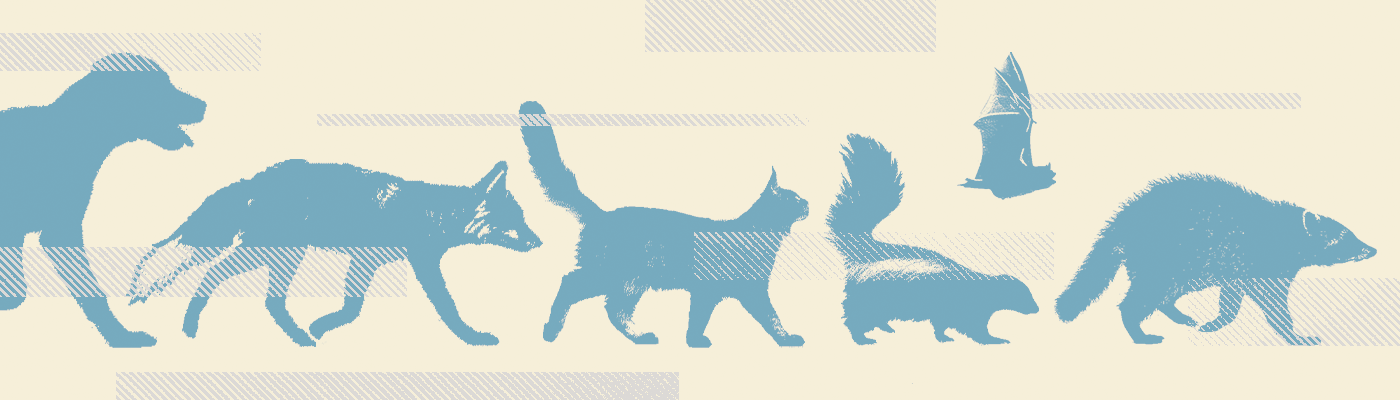
Rabies is caused by a virus found in the saliva of infected mammals. Rabies can infect any mammal, including humans, pets, wildlife and livestock. If untreated, rabies is almost always fatal in humans.
Rabies is found more commonly in bats, raccoons, foxes and skunks.
How is rabies transmitted?
Rabies is spread through:
- Bites that break the skin
- Getting infected saliva in an open cut, sore or other wound
- Getting infected saliva in the mouth, nose or eyes
- Direct contact with infected brain or nervous system tissue through broken skin or mucous membranes in the eyes, nose or mouth
Rabies can not be transmitted through contact with the blood, urine or feces of an infected animal.
Bats and rabies
Unlike other mammals that carry rabies such as foxes, raccoons and skunks, bats cannot be vaccinated using baits.
Bites from rabid bats have caused almost all human cases of rabies in Canada over the past several years. Bats have small, needle-like teeth, and their bites can go easily undetected.
It is not always possible to identify if a bat has rabies. However, rabid bats might show the following signs:
- They lose the ability to fly.
- They are active during daylight hours.
- They are not afraid of noises.
- They might appear to be lazy.
If there is a bat in your house, try to keep the bat in one room. Make sure people and pets do not touch the bat. Do not try to capture the bat. Call pest control or a wildlife removal service.
Bat-proof your home
Examine your home for holes that might allow bat entry.
- Caulk any openings or holes that may allow bats to enter.
- Fill electrical and plumbing holes with stainless steel wool or caulking.
- Use window screens, chimney caps, and draft guards beneath doors to attics.
- Ensure that all doors to the outside close tightly.
What to do if you are bitten or scratched by an animal or bat
Immediately and thoroughly clean the wound with soap and water for about 15 minutes.
Seek medical attention as soon as possible. They may recommend post exposure prophylaxis (PEP). Collect animal owner information (name, address and phone number) if possible.
If you find a bat in a room with a child or adult who cannot give a reliable history of contact with a bat, call your doctor immediately.
Always report an animal bite to Southeast Public health, including bites from wildlife and bats.
- Report an animal bite in Hastings and Prince Edward Counties
- Report an animal bite in Kingston, Frontenac and Lennox & Addington
- Report an animal bite in Leeds, Grenville and Lanark Counties
To report an animal bite, call Southeast Public Health or send an email. Include your name and phone number. If possible, collect the name and address of the animal owner, as well as the animal’s vaccination record.
- Hastings and Prince Edward Counties
- Phone: 1-800-267-2803, extension 677
- E-mail: ehfax1@SoutheastPH.ca
- Kingston, Frontenac and Lennox & Addington
- Phone: 613-549-1232
- E-mail: enviro.health@SoutheastPH.ca
- Leeds, Grenville and Lanark Counties
- Phone: 1-800-660-5853
- E-mail: protection@SoutheastPH.ca
Read the latest version of the rabies prevention and control protocol from the Ontario Ministry of Health.
Rabies treatment – post exposure vaccine
If deemed necessary, a person potentially exposed to the rabies virus will receive treatment (Post Exposure Prophylaxis – PEP) – to protect them from getting rabies, this treatment consists of:
- Antibodies that help destroy the rabies virus, which is given at the site of the wound
- Four shots of rabies vaccine, given over 14 days
You should get PEP as soon as possible after exposure to rabies:
- PEP is safe and effective.
- PEP shots are free for Ontario residents.
- If you had PEP shots before, talk to your doctor to find out how many more shots you will need.
Signs and symptoms of rabies
Humans
Symptoms usually appear three to eight weeks after the bite, but they can appear as soon as nine days afterwards or as long as seven years after a bite. It’s never too late to start rabies vaccination following an animal bite. Rabies is usually fatal unless treatment starts before symptoms appear.
Early symptoms of rabies may include:
- Numbness around the site of a bite
- Fever
- Headache
- Feeling sick
Later symptoms of rabies may include:
- Itchiness around the site of the bite (even after it’s healed)
- Muscle spasms
- Fear of air gusts (aerophobia)
- Fear of water (hydrophobia)
- Difficulty breathing
Pets
- Change in behaviour, such as becoming:
- More quiet or depressed
- Unusually friendly when normally timid
- More aggressive toward people, animals, objects or its own body
- Difficulty eating or drinking, or loss of appetite
- Barking or meowing differently
- Drooling more than usual
- Biting the site of the wound where your pet was exposed to rabies
- Overreacting to touch, sound or light
- Lack of coordination, staggering or falling
- Becoming partially or completely paralyzed (unable to move)
Once a pet shows signs of rabies, it will usually die within 7 to 10 days.
Wildlife
- Loss of fear of humans
- Coming out during the day when they are normally only seen at night
How to protect your family and pets from rabies
- Do not feed or touch wild or stray animals.
- Teach children not to touch animals, including dogs and cats, even if they appear friendly.
- Avoid animals behaving strangely.
- Take measures to prevent wildlife from taking up residence in your home or on your property.
- Do not attempt to relocate any wild animals.
- Do not go outside when bats are most active.
- Remember to collect animal owner contact information if you have been scratched or bitten by someone’s pet.
- Report all animal bites, scratches and possible exposures to the public health as soon as possible.
- Get Pre-Exposure Vaccine if you are at high risk of close contact with potential rabid animals or the rabies virus such as:
- People who work closely with animals, such as veterinarians and veterinary staff, animal control and wildlife workers
- Laboratory workers handling the rabies virus
- Hunters and trappers in areas with confirmed rabies
- People who explore caves (spelunkers)
- Certain travelers to countries or areas at risk. Contact a travel medicine clinic for consultation.
How to protect your pets from rabies
- All dogs and cats over the age of three months in Ontario must be immunized against rabies. Owners must ensure their pets, including indoor cats, are up to date with their rabies vaccine.
- For information about upcoming low-cost rabies clinic in the Southeast Public Health region or look for rabies vaccine clinics in Ontario from the Ontario Association of Veterinary Technicians.
- Don’t allow your pets to roam free; keep them indoors at night to prevent contact with wild animals.
Animal bite investigations
- Any person with knowledge of an animal bite involving a mammal is required to report the incident to Southeast Public Health in accordance with Ontario Regulation 557 and the Ontario Public Health Standards. Southeast Public Health will investigate reported animal biting incidents to minimize the risk of rabies transmission in humans.
- A Public Health Inspector (PHI) who receives information related to an animal bite will ensure the biting-animal is confined and isolated for a 10-day observation period. The biting-animal is to be confined to their home and isolated from all other animals and persons, except the person caring for the biting-animal. The owner is to observe their animal for changes in behaviour or signs of illness, and to report them to Southeast Public Health immediately. A Public Health Inspector will observe the biting-animal at the end of the 10-day observation period to ensure the animal is alive and healthy. If the bite was from a wild animal or bat, a Public Health Inspector will discuss options like vaccination or testing of the animal.