
Radon
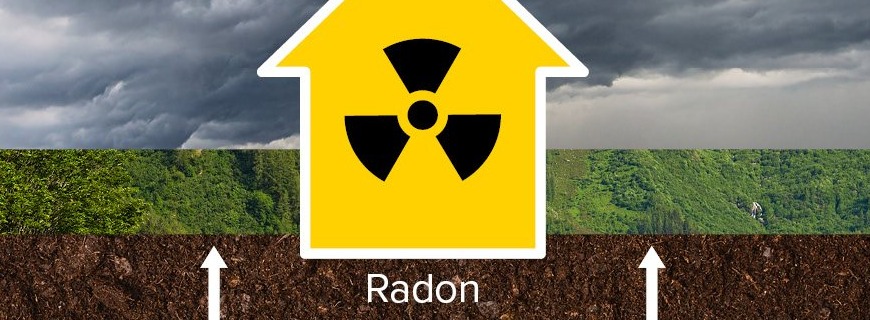
Radon is a radioactive gas. You can’t see, smell or taste radon. Radon is formed by decaying uranium, which naturally occurs in rocks and soil. Radon gas can seep into your home through gaps in basement walls or the foundation.
What are the health effects of radon?
Breathing in high levels of radon for many years can lead to lung cancer. In Canada, radon is the leading cause of lung cancer for non-smokers.
The health risk from radon exposure is long-term and often dependent on three things:
- The level of radon in your home.
- The length of time (in years) you have been exposed.
- Smoking habits or exposure to second-hand smoke.
Reducing the levels of radon found in your home is possible and can save lives.
How does radon get into my home?
Radon gas can enter buildings through cracks in the foundation, gaps around pipes, open floor drains or any other area of exposed soil. When radon mixes with the air outside, it’s not a health risk as the air outside dilutes the radon concentrations. However, when radon seeps into confined spaces like a house, it can build up to high levels and become harmful. You and your family can breathe in high levels of radon without knowing.
Is there radon in my home?
Every house contains some amount of radon. The likelihood of high radon levels cannot be predicted by the age or location of a home; all homes are at risk. The only way to know how much radon is in your home is to test.
Southeast Public Health does not sell radon tests. You can purchase a radon test kit directly from Take Action on Radon.
Local radon data
In the winter of 2018 to 2019, 1,047 households in the Kingsston, Frontenac, Lennox and Addington regions participated in a radon testing study that measured radon levels in their homes.
- 21 percent of homes tested above Health Canada’s radon guideline of 200 Bq/m3.
- 52 percent of homes tested above the World Health Organization’s radon guideline of 100 Bq/m3.
Social housing
In the winter of 2019 to 2020, Southeast Public Health and the City of Kingston Housing and Social Services Department, with support from Health Canada, sampled radon levels in basement and ground-level social housing units in the City of Kingston and Frontenac County.
- Three percent of houses tested above Health Canada’s radon guideline of 200 Bq/m3.
Most of these houses have already been mitigated and re-tested to ensure they are now below Health Canada’s guideline, and the remainder of the homes will be done soon.
Licensed child-care facilities
In the winter of 2018 to 2019, Southeast Public Health tested radon levels in all 53 licensed child care centres in the Kingston, Frontenac and Lennox & Addington regions.
- 4 percent of centers tested above Health Canada’s radon guideline of 200 Bq/m3.
- 13 percent of centers tested above the World Health Organization’s radon guideline of 100 Bq/m3.
All child-care centers that tested above 200 Bq/m3 have been mitigated and re-tested to ensure they are now below Health Canada’s guideline.
Smoking and high levels of radon
Lung cancer is the most diagnosed cancer in Canada. It is the leading cause of death from cancer for both men and women. People who smoke have the highest risk of developing lung cancer and exposure to radon increases that risk. The combination of high radon exposure and smoking tobacco is very dangerous.