
Lead
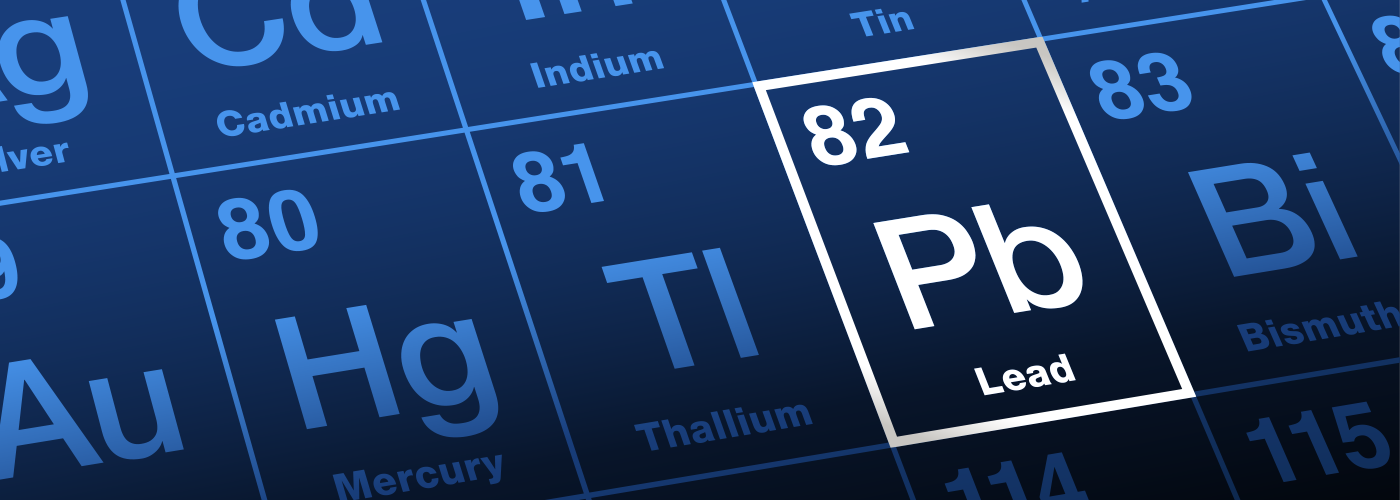
What is lead and where is it found?
Lead is a heavy, soft bluish-grey metal that occurs naturally in the earth’s crust in small amounts (average concentrations of 5 to 50 micrograms per kilogram). Much higher concentrations are found in lead ores. Lead is toxic to the brain and nervous system of adults and children. It is most often found in old paint, the pipes of old homes built before the mid-1950s, and some consumer products.
What are the sources of lead exposure?
Humans are exposed to lead in both outdoor and indoor environments.
Soil
- Lead contamination in soil usually originates from one or more of the following sources: past and current industrial fallout, old external paint, past use of leaded gasoline and pesticides that contain lead, street dust, and industrial waste disposal.
- Provincial standards for lead in soil are regulated under the Environmental Protection Act.
Water
- Some homes may have a lead service line — the pipe connecting the house plumbing to the water main.
- The National Plumbing Code allowed lead as a material in pipes until 1975.
- Brass faucets and fittings may contain lead.
- Some plumbing may contain lead solder — the National Plumbing Code allowed lead in solder until 1986.
- Visit our drinking water page for more information.
Food
- Lead is not permitted to be added to foods sold in Canada; however, due to its ubiquitous presence in the environment, it is present in all foods, generally at very low levels.
- Lead in the environment can be ingested by animals and enter the food supply. Lead is more common in certain foods and in foods grown in geographical areas with higher levels of environmental lead contamination.
Air
- Lead concentrations in the air have declined significantly since the introduction of unleaded gasoline in Canada in 1975. Currently, the level of lead in the air of most Canadian cities is below the detectable level so, generally, there is no need to be concerned.
- There could be some concern for people living near a point source, such as a smelter or refinery, where lead is released into the air through industrial emissions. However, the levels of lead from smelter emissions are regulated under the Canadian Environmental Protection Act (CEPA).
Consumer products
- Some imported folk remedies and ayurvedic medicines from India, Mexico, Asia, Africa, and the Middle East may contain lead. Avoid these remedies or check the Health Canada website for advisories if you are not sure whether a folk medicine contains lead.
- Older toys may contain lead, especially if they do not indicate that they are lead-free. Some imported toys also may contain lead. Choose unpainted toys for infants and young children to avoid lead exposure (by putting the toys in their mouths).
- Hobbies that involve lead are painting, glazing pottery, hunting and stained-glass making.
- Some older homes in Canada may have lead-based paint on the walls. Your home probably contains lead-based paint if it was built before 1960. If built between 1960 and 1990, the exterior may contain lead-based paint. The paint on interior surfaces may also contain lead in smaller amounts that could still be harmful, especially to young children. Houses built after 1990 should not contain lead because all consumer paints produced in Canada and the US were virtually lead-free by this time.
- Lead crystalware may release lead into food and beverages it comes in contact with.
What are the health effects at different lead levels?
The latest medical and scientific research shows that absorption of even very low levels of lead into the blood may have harmful health effects on the intellectual and behavioural development of infants and young children. Blood lead levels in the range of 10 to 15 micrograms per decilitre in fetuses, infants, and children have been associated with adverse behavioural and cognitive changes. When blood lead levels exceed 40 micrograms per decilitre, there is a decrease in the body’s capacity to produce red blood cells.
What are the routes of exposure to lead for children and adults?
Lead may enter the body through the mouth (ingestion), the lungs (inhalation) or the skin (dermal route). A growing fetus may also be exposed to lead from their parent through the placenta. For the general population in Canada, the main exposure routes are through ingestion or inhalation. The most common route of entry is ingestion, except in industrial environments, where inhalation of lead fumes may play a larger role. Absorption of lead through the skin is rare.
Children are at greater risk of ingesting lead due to their frequent hand-to-mouth activity and normal tendency to mouth or chew objects they have contact with (especially non-food products such as paint chips, furniture or toys).
What are symptoms of lead poisoning?
Some of the more prominent symptoms of lead poisoning include headaches, irritability, abdominal pain, vomiting, anemia (general weakness, paleness), weight loss, poor attention span, noticeable learning difficulty, slowed speech development and hyperactivity. However, at very low exposure levels, lead may not produce specific symptoms, but still can produce subtle adverse effects on children’s development.
Home gardening and lead
For garden produce, most of the risk from contaminated soil is due to the dust deposits on the surface of leafy vegetables or on the surface of tuber vegetables (such as carrots and potatoes), rather than from plant uptake of contaminants from the soil. It is possible for plants to take up contaminants.
It is likely more cost-effective to install a raised bed garden if you are concerned about the soil. However, if you suspect high levels in the soil that you plan to use for gardening, it may be helpful to have the soil tested.
Tips for gardening safely
- Wash all of your produce before eating it.
- Add new clean soil, compost or mulch to your garden periodically.
- Use raised garden beds.
- Peel root vegetables and remove outer leaves or leafy plants.
- Wear gloves and wash your hands after working in the garden and before eating.
- Wash gardening clothes and tools.
- Leave garden shoes outside and clean them periodically.
- If there are small children at home, watch them carefully to make sure they do not ingest the soil.
Where can I have environmental samples tested for lead?
There are private laboratories licensed by the Ministry of the Environment, Conservation and Parks (MECP) that can test for lead (at a cost).
- List of licensed laboratories for lead – Government of Ontario
Interpreting testing results
Full depth generic site condition standards in a potable ground water condition
- Contaminant: Lead
- Soil standards (other than sediment) µg/g In agricultural or other property use: 45
- Soil standards (other than sediment) µg/g In residential, parkland, or institutional property: 120
- Soil standards (other than sediment) µg/g In industrial, commercial, or community property: 120
- Potable ground water µg/L In all types of property: 10
What can you do to reduce your and your family's exposure to lead?
- Clean your house regularly to remove dust and particles that may contain lead. This is especially important for surfaces that young children might touch often.
- Do not keep food or drinks in lead crystal containers for any length of time. Do not serve pregnant people or children drinks in crystal glasses. Babies should never drink from lead crystal.
- If you own glazed glass or ceramic dishes bought outside of Canada, do not use them for serving food or drinks. They may contain higher levels of lead than are allowed in Canada.
- If you have children six years of age or under, remove any horizontal PVC (plastic) mini-blinds made in Asia or Mexico from your home.
- Discourage children from putting things into their mouths unless they are intended to be mouthed (like food and pacifiers).
- If you work in a smelter, refinery or any other industry where you are exposed to high levels of lead, shower and change your clothing before going home. Make sure you have your blood lead level checked regularly.
- Never burn waste oil, coloured newsprint, battery casings or wood covered with lead paint in or near your home because lead fumes may be released. Dispose of them through your city or town’s hazardous waste program.
- If you use lead solder in a hobby (like making stained glass), use a good quality breathing mask, keep surfaces clean, and keep children and pregnant people out of the area. Wash hands after handling lead solder.
- Avoid eating wild game that has been shot with lead bullets. Use non-lead bullets and shot when hunting for food.
- If you are concerned about potential exposure to lead, speak to your health-care provider.