
Needle safety
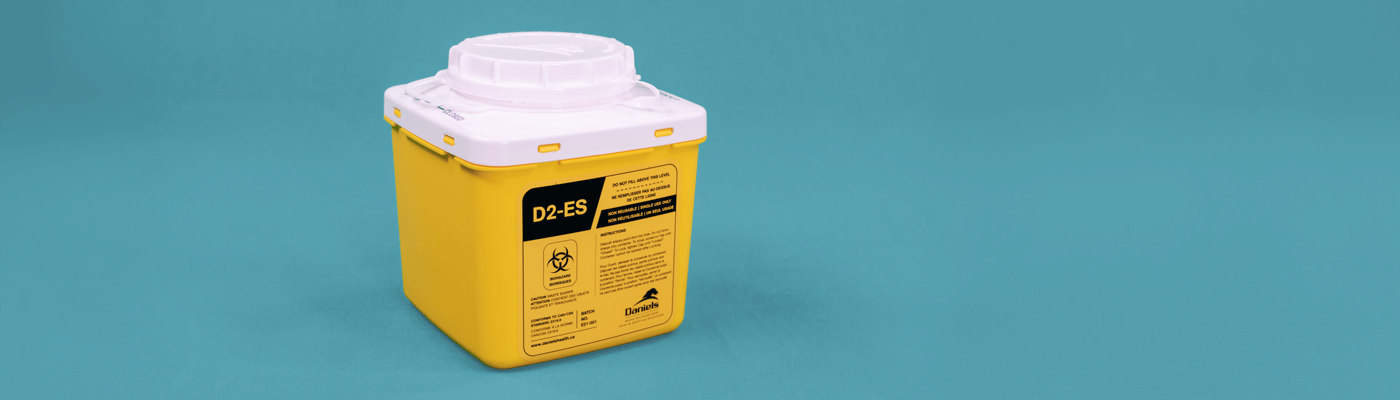
Safe needle collection and disposal help keep communities safe by preventing needle stick injuries, limiting the number of discarded needles in the community, and preventing the reuse and sharing of needles. Most people will not get sick from picking up or being stuck by a discarded needle, but a used needle may contain blood that carries bacteria and viruses that can cause serious infection or disease.
If you find a needle, syringe, or other drug paraphernalia in a public place, contact Southeast Public Health:
- Kingston, Frontenac and Lennox & Addington call 613-548-5860
- Hastings and Prince Edward Counties call 613-966-5500, extension 620
- Leeds, Grenville and Lanark Counties call 1-800-660-5853 or use our online reporting form.
Leave a detailed message with the location of the needle and your contact information in case we have questions. Requests for service will be responded to Monday to Friday, 8:30 a.m. to 4:30 p.m., excluding holidays.
If you find a needle, syringe, or other drug paraphernalia on your property, or business, it is the responsibility of the property owner, landlord, or business owner to pick up and dispose of the needle.
Picking up a needle safely
Put gloves on to protect yourself from fluid contamination (they will not protect against punctures or cuts). Closed-toe shoes are recommended. Sharps should be packaged in a specialized sharps container. If you don’t have a specialized sharps container, use a hard plastic container or metal can with a tight-fitting lid. The lid should be reinforced with tape, and the container should be marked « Biohazard. » Glass containers, cardboard containers, or cardboard boxes should not be used for disposal of sharps. Sharps containers are available for free at local pharmacies, or at any Southeast Public Health office.
- Bring your puncture-resistant, sealable container to the site of the needle and place it on a flat surface. Do not hold the container while placing the needle in the container.
- Use tongs or tweezers to pick up the needle by the middle of the plastic tube with the sharp end facing down. If there are multiple needles, pick them up one at a time.
- Do not re-cap, clip, bend or break syringes or needles that are ready for disposal.
- Place the needle in the container, sharp end first, and close the container tightly.
- Dispose of tongs or tweezers and gloves. Wash your hands with soap or use hand sanitizer.
Options for safe disposal
- Dispose of the container in an outdoor needle disposal bin.
- If the container was from a pharmacy, return the sealed container to any pharmacy.
- If the container was from Southeast Public Health, return the sealed container to one of our offices.
Do not throw loose needles in the garbage, put needles in a recycling bin, flush needles down the toilet, or throw needles in bushes or parks.
If you need more information, contact your local Southeast Public Health office.
Community needle stick injuries: What to do and what is the risk?
Getting poked by a needle can be concerning. However, it is important to remember that the risk of infection from an improperly discarded needle in the community is extremely low. In the event of a needle stick injury, the following steps should be taken:
- Allow the wound to bleed freely. Do not squeeze the wound. This may damage the tissues and increase the risk of infection.
- Wash the wound with soap and water. Do not apply bleach or alcohol to the wound.
- Go to your local emergency department immediately for follow-up care. An assessment will be done to determine the need for medications or vaccinations to further reduce the risk of transmission (e.g., post-exposure prophylaxis). Blood tests for hepatitis B, hepatitis C, and HIV will be done at this visit, with follow-up blood tests to be done over the next three months.