
Algae blooms
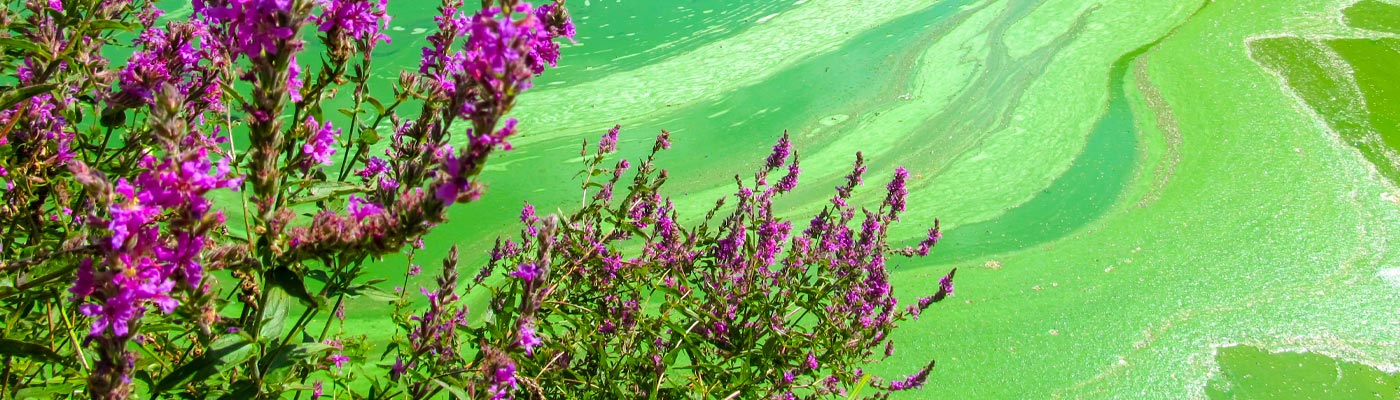
Harmful algae bloom (HAB) is another term to describe blue-green algae, since it can be harmful to people and pets. Blue green algae (or cyanobacteria) occur naturally and can be found in oceans and many freshwater lakes, bays and inlets.
Harmful algae blooms can be found in some Ontario waterways, especially where water is shallow, slow moving, warm, or has been contaminated with fertilizer, sewage, or phosphate soap.
Normally, algae are barely visible. During warm weather, this can change as algae rapidly increase in size to form large masses called blooms. Harmful algae blooms are usually detected in the hot summer months and early fall, often forming repeatedly in the same lake or waterway.
Dense algae blooms can make the water look like bluish-green pea soup, or a shiny paint slick. Although cyanobacteria are often called blue-green algae, blooms can range in colour from green to red. Fresh blue-green algal blooms often smell like fresh cut grass, while older blooms can stink like pig pens or rotting garbage.
Risk to people and pets
While many forms of blue-green algae are harmless, some produce toxins that can negatively affect health. If you see harmful algae blooms in a waterway, do not swim, drink or use the water. Keep animals away from the water too.
Longer exposure to toxins in the water through drinking, swimming, bathing, cooking or washing may lead to health problems including: itchy, irritated eyes and skin; headache; fever; diarrhea; abdominal pain; nausea; and vomiting.
NOTE: Do not boil the water, boiling kills the algae resulting in the release of more toxins.
If you feel unwell after encountering a harmful algae bloom, seek medical attention.
If you see harmful algae blooms in the water report it to the Spills Action Centre at 1-866-663-8477.
Protect your drinking water from harmful algae blooms
If you get drinking water from a lake, river, creek or a shallow well near a body of water, ensure the water is properly treated to protect against harmful bacteria and harmful algae blooms.
Water treatment is complex, consult a qualified professional who can assess your water supply to ensure the best treatment system is in place. If you are unsure about the effectiveness of your water treatment system, find another source of drinking water such as a drilled well, a dug well far from shore, bottled water or water holding tank filled with water from a licensed water treatment plant. An alternate water source may also be recommended if you draw water from a water source that has frequent harmful algae blooms.
Water treatment systems that reduce toxin levels from harmful algae blooms
Southeast Public Health recommends property owners consult a qualified water quality specialist about appropriate water treatment equipment capable of reducing toxin levels.