
Vector-borne disease
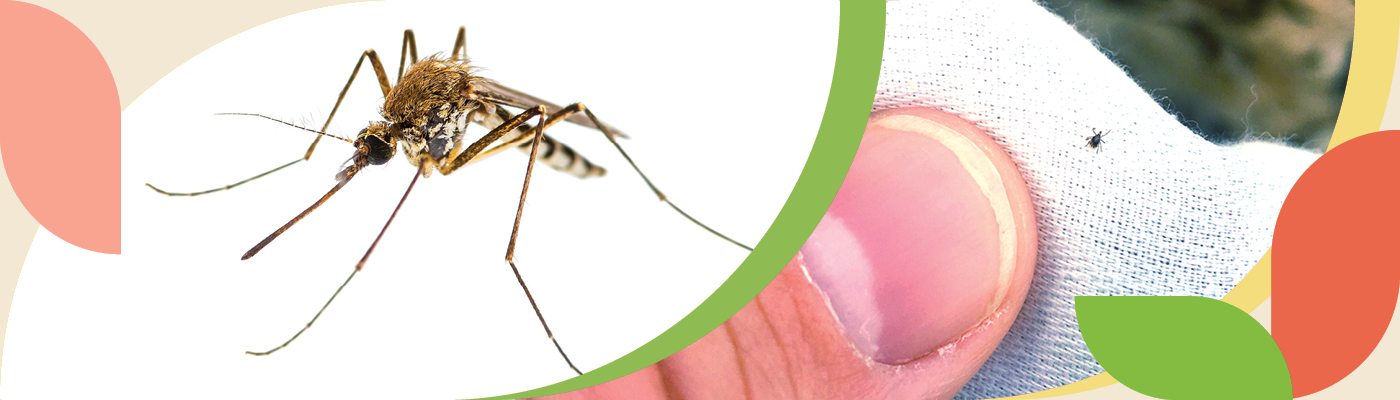
If you are a partner organization, employer, or educator, find more information:
Canada’s changing climate (warmer temperatures, longer summers, milder winters, increased precipitation, and high humidity) is increasing the risk and transmission of infectious diseases such as tick-borne diseases and West Nile virus. These conditions are making more of Canada suitable for tick and mosquito species to expand their habitat, grow in number, remain active for longer and establish in new areas; all of which increases the risk of disease.
Who is at risk?
The Southeast Public Health region is a high-risk area for Lyme disease as well as many other southern regions of the province. Everyone who spends time outdoors is at risk of being bitten by an infected mosquito or tick, however risk is greatest for:
- Infants and young children
- Older adults
- People who are pregnant
- People who work outdoors
- People who are underhoused or experiencing homelessness
- People with chronic illness or compromised immune systems
- People who live in or near endemic areas
- People who live near swamps or marshes
- People who spend time in wilderness settings (camping, hiking), especially in areas with tall grass and still water
Health impacts
Infected ticks can transmit bacteria, viruses, and parasites that can cause diseases, such as:
Visit our Lyme and other tick-borne diseases page for information on actions you can take to reduce your risk of tick-borne diseases.
West Nile virus (WNV) is spread to humans by the bite of an infected mosquito. Mosquitoes become infected by biting an infected bird. The virus is not spread by person-to-person contact, nor is it spread directly from a bird to a human. The risk of becoming seriously ill from West Nile virus is low. Most people (about 4 in 5) infected with West Nile virus will not have any symptoms.
Frequently asked questions
How can I prevent tick-borne diseases
Preventing tick bites is the key to preventing Lyme and other diseases carried by ticks.
The following actions can reduce your risk:
When outside
- Apply a Health Canada approved insect repellent containing DEET or Icaridin to exposed skin and clothing. Visit the Canadian Paediatric Society for information on insect repellent use for young children.
- Consider wearing clothing that has been treated with permethrin.
- Wear light-coloured clothing so you can spot ticks more easily.
- Wear long-sleeved shirts, pants, socks and closed footwear. Tuck pants into socks.
- Walk on cleared paths and trails. Keep pets from wandering off the path.
After being outside
- Check yourself, pets, clothing and anything else you bring in with you for ticks.
- Put clothes worn outdoors in a dryer on high heat for one hour to kill any ticks.
- Shower or bathe with warm water within half an hour after coming indoors to wash away loosely attached ticks.
- Perform a daily tick check. Pay special attention to your scalp, ankles, armpits, groin, navel and behind your ears and knees. Do the same for others in your care and pets.
- Talk to your vet about protecting your pets from ticks.
- Create a tick-free zone around your property.
Resources
- How to check for ticks – Government of Canada
- How to avoid getting a tick bite – Government of Ontario
- How to prevent tick bites – Government of Canada
What should I do if I have had a tick bite?
Remove the tick promptly to decrease the risk of getting Lyme disease. Do not squeeze, smother, or burn the tick, or use other remedies.
How to remove a tick properly
- Use a pair of fine-tipped tweezers to grasp the tick as close to the skin as possible.
- Pull up with a steady motion.
- If the mouthparts break off and remain in the skin, remove them with a clean pair of tweezers. If you are unable to remove them easily, leave them alone and let the skin heal.
- Clean the bite area with soap and water or hand sanitizer.
Visit your local health-care provider as soon as possible if:
- You are not comfortable removing the tick
- If you suspect the tick has been attached for longer than 24 hours and/or has been removed within the previous 72 hours
- If you have concerns or are experiencing signs and symptoms of Lyme or other tick-borne diseases
Resources
How to remove a tick – Government of Canada
How to check for ticks – Government of Canada
How to properly remove a tick – Government of Canada
What diseases are passed by ticks?
Infected ticks can transmit bacteria, viruses, and parasites that can cause diseases, such as:
The Southeast Public Health region is a high-risk area for Lyme disease as well as many of the southern parts of the province.
What ticks are common in the Southeast Public Health region?
Climate change is altering the range of tick habitats, driving the migration of some tick species northward into Canada from the United States. As such, the types of ticks (and tick-borne diseases) in our area could change under a changing climate. Currently, blacklegged (deer) ticks are the most common, and can be found almost anywhere outdoors. They most often live in places that stay moist and humid at ground level, such as in tall grass, and bushy, wooded, and forested areas.
Workplaces
I work outside, how can I protect myself from ticks and tick-borne diseases?
- Know the signs and symptoms of tick-borne diseases
- Take preventative actions, both during and after work
During work
- Remember to wear:
- Light-coloured clothing to help find ticks more easily.
- Long-sleeve shirts and long pants.
- A hat if contact with overhead vegetation cannot be avoided.
- Loose footwear and socks.
- Tuck your pants into your socks.
- Use an insect repellent, or bug spray, containing DEET or icaridin on clothes and exposed skin (always read the label for directions on use).
- Avoid bushy areas and long grass if possible.
After work
- Do a total body inspection for ticks immediately.
- Pay close attention to areas such as the scalp, ankles, armpits, groin, naval and behind the ears and knees.
- Use a mirror to check the back of your body or have someone else check for you.
- Shower to wash off a tick that may not be attached through a bite.
- Check any equipment or gear for ticks before bringing it inside.
- Put clothes in the dryer for one hour on high heat to kill any ticks.
Resources
Working outdoors – Government of Ontario
How to prevent tick bites – Government of Canada
How to remove a tick – Government of Canada
I work outside, how can I protect myself from West Nile virus?
Some mosquitoes carry and can infect humans with the West Nile virus.
The chance of an infected mosquito biting and infecting a person is very small, but, as a safety precaution, it is important you take measures to minimize exposure of your workers to mosquitoes. This is especially important in areas where West Nile virus activity has been documented.
Suggested precautions:
- Cover exposed skin.
- When you are outside, wear:
- long pants and loose-fitting shirts with long sleeves.
- socks and a hat (try a mosquito net over your hat to protect your head).
- light-coloured clothing (mosquitoes are attracted to dark colours).
- Use insect repellent.
- When you are outside, you should use insect repellents (bug sprays and lotions) that contain the chemicals DEET or Icaridin.
- Do not handle dead birds or animals with your bare hands.
Resources
How you get West Nile virus – Government of Ontario
How to avoid West Nile virus – Government of Ontario
Resources
- Tick-borne diseases – Government of Ontario
- eTick TickTool